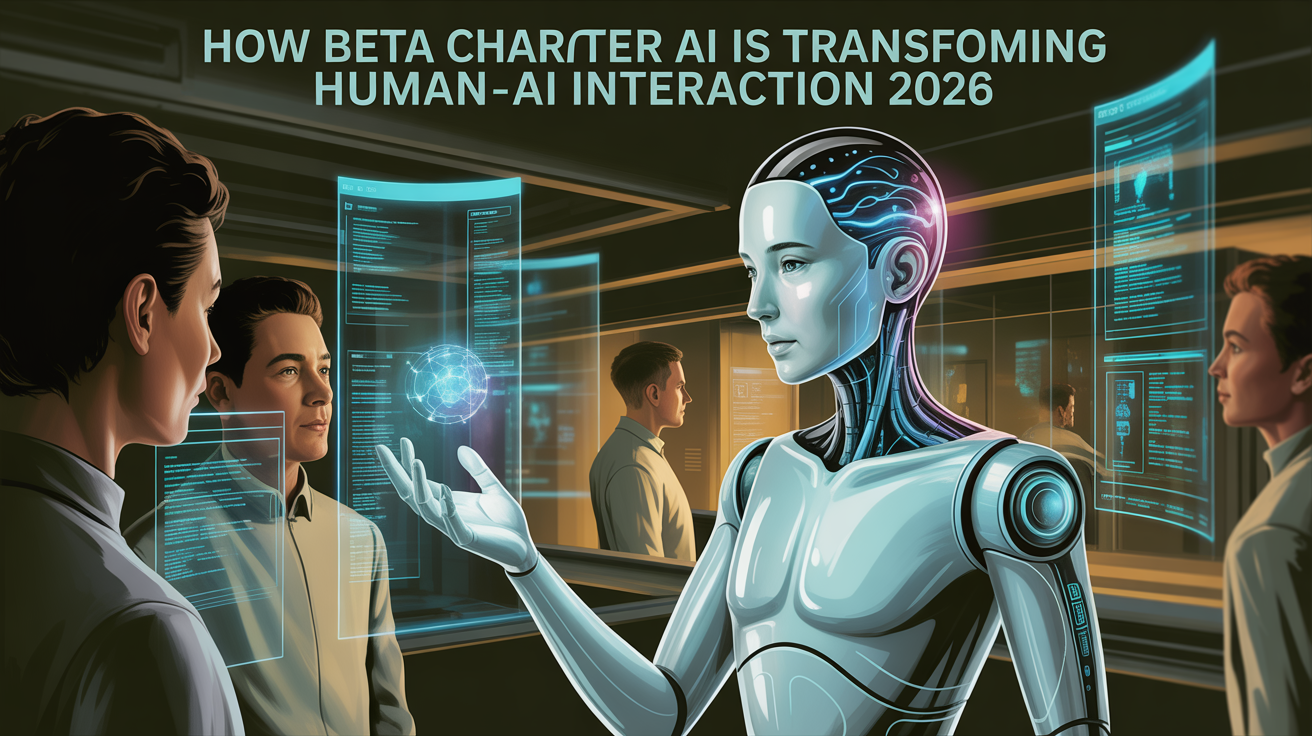
Beta Character AI is transforming human-AI interaction by enabling more natural, adaptive, and emotionally aware conversations.It moves beyond basic chatbots to create personalized, human-like digital experiences across multiple use cases.
We have come a long way from the days when using a computer meant typing strict command lines into a DOS prompt. Siri and Alexa’s rigorous question-and-answer formats from the early days are starting to look old-fashioned. We are now in a time where AI can do more than just analyze information; it can also act like a person.The advent of systems like Beta Character AI is the most obvious sign of this change. These devices can do more than just tell you the time or the weather. persons expect them to act like genuine or made-up persons from the past, present, or even new ones, and have discussions that feel authentic.
This technology has effects that go well beyond just entertainment. It changes the basic way we connect with machines. People are starting to see AI as more than just a tool. They see it as a friend, a coworker, and a storyteller. This article talks about how Beta Character AI is transforming the way people and computers talk to each other, the Technologies that make it possible, and what the future holds for this field that is advancing so quickly.
What Is Beta Character AI?
Beta Character AI is a sort of conversational AI that is meant to act like different people. Character AI is different from a regular virtual assistant like Google Assistant, which tries to be neutral, helpful, and objective. Character AI has opinions, eccentricities, emotional responses, and a distinct backstory.
“Role-play” is the main idea behind it. The AI doesn’t merely answer queries about the literature when a user interacts with a persona based on, say, Sherlock Holmes. It becomes Holmes. It takes on his Victorian vocabulary, his deductive reasoning, and maybe even his arrogance.
Main Features and Functions
At its core, this technology makes it possible to:
- Persona adoption: The capacity to stay “in character” during a conversation.
- Open-ended conversation: These AIs can talk about philosophy, write poetry, or behave like they’re having a casual coffee chat. This is different from customer service bots, which have to follow a script.
- User customisation: A lot of platforms enable users change the traits, welcome messages, and knowledge bases of the AI they want to talk to.
This is very different from regular chatbots. A classic bot is transactional; you give it information, and it provides you a precise answer to a problem. Beta Character AI is relational. The purpose is the engagement itself, not necessarily finishing a certain job.
Evolution of Human-AI Interaction
To understand why this is transformative, we have to look at where we came from.
Early Rule-Based Systems
The earliest chatbots, like ELIZA in the 1960s, were essentially parlor tricks. They used pattern matching and substitution methodology to simulate conversation. ELIZA might have enquired, “Why are you sad?” if you informed her you were sad. It didn’t know what “melancholy” meant; it just observed the word and followed a rule for grammar.If the user didn’t follow the expected inputs, these systems stopped working right away.
Transition to Conversational AI
The next great step forward was when big data and machine learning became popular. We were able to break free from stringent rules because to Siri and the initial versions of GPT (Generative Pre-trained Transformer). These models were able to predict the following word in a phrase because they read a lot of literature. They didn’t always make sense, but they could answer more questions and sound more like actual people. You can ask a question and get an answer, but if you ask the same question again five minutes later, the AI won’t remember what you said.
The Rise of AI Characters with Real Lives
This brings us to the current moment. We have combined the linguistic fluency of large language models (LLMs) with specific “system prompts” that define identity. We aren’t just training models to speak English; we are training them to speak as someone. Adding “personality” makes the AI easier to use and more interesting by acting as a user interface layer. It turns the cold logic of a machine into something warm and familiar.
Key Technologies Powering Beta Character AI
A lot of advanced technologies have to work together to make it possible to converse to a simulated character.
Processing of Natural Language (NLP)
NLP is the foundation. This part of AI helps computers understand, use, and change human language. NLP is what lets Character AI understand slang, idioms, and the phrase “I’m feeling blue” means melancholy, not color. It links what people want with what technology can do.
Models for Machine Learning and Deep Learning
Deep Learning is like the brain, while NLP is like the interpretation. GPT-4, Claude, and LLaMA are examples of models that can make predictions. They have read billions of lines of material, such books, scripts, forums, and articles, to learn how language works. When a Character AI answers, it doesn’t “think” like a person does. It is calculating, based on probability, which sequence of words best fits the character’s persona and the current context.
Context Awareness and Memory
This is the biggest differentiator for modern Character AI. Early bots had the memory of a goldfish. New beta systems utilize “context windows” or vector databases to remember what you said ten messages ago—or even ten days ago.
A smart AI character will remember that you don’t like broccoli and won’t give you any for dinner three days later. This long-term memory makes you feel like you know someone, which is really crucial for being fully present.
Emotional Intelligence & Tone Adaptation
While AI cannot “feel” emotions, it can mathematically map them. Sentiment analysis allows the AI to detect if a user is angry, joking, or sad. A Character AI takes this a step further by modulating its own “emotional” output. If you insult the character, it might simulate offense. If you praise it, it might simulate gratitude. This reciprocity makes the interaction feel dynamic and alive.
How Beta Character AI Improves User Experience
The shift from transactional to personality-driven AI offers distinct advantages for the user.
More Natural and Engaging Conversations
Standard AI can feel sterile. It wants to be right above all else. Character AI tries to make things believable. The discourse flows better when people accept mistakes, slang, and emotional subtleties. It makes it easier for the user to think because they don’t have to talk in “computer commands” to be understood.
Responses that are tailored to you
The AI’s reactions are always different since it is taking on a persona. A “Corporate HR” AI will give you a far different answer than a “Pirate Captain” AI if you ask them for help with a nasty boss. This helps people figure out what kind of care they need, like tough love, someone to listen to them, or a funny way to forget about their worries.
Regular interactions across time
Trust is built by things that stay the same.It will be easier to use if the gadget can remember your name, preferences, and past discussions. You don’t have to start over every time you sign in. This is really important for things like coaching or tutoring because growth builds on itself.
Real-World Applications of Beta Character AI
This technology may appear new, yet its uses are quickly spreading into important areas.
Fun and Role-Playing
This is the most clear use case at the moment. individuals write fan fiction, tell stories, or play text-based adventure games with other individuals. You can make as many options as you like, exactly as in a book where you pick your own way. Writers use these characters to try out different ways of talking, while players use them to make RPG backstories more interesting.
Help with learning and education
Imagine learning history by interviewing a simulation of Abraham Lincoln. Or practicing Spanish by conversing with a virtual barista in Madrid who corrects your grammar but stays in character. Beta Character AI changes learning from just memorizing things to actually doing things. It gives kids a place where they may ask “stupid” questions without being judged.
Customer Support and Virtual Agents
Brands are beginning to realize that personality sells. A generic support bot is frustrating. A support bot with a personality that fits the brand maybe helpful, funny, or calming—can help ease anger. For example, Disney might hire support agents who talk like their characters, bringing the joy of the park into the digital help queue.
Writing and telling stories in a unique way
These AIs can help authors come up with ideas for as long as they want. If a writer doesn’t know how a villain might respond to a story twist, they can act it out. It’s a strategy to get over writer’s block by putting the creative process outside of yourself.
Ethical Issues and Problems
US-based technology competition Dimon, the advent of Character AI comes with big hazards that need to be handled.
Privacy of Data and Safety of Users
These systems encourage intimate, vulnerable conversation. People can tell an AI their secrets or talk about their mental health problems. It is highly crucial to keep this information private, encrypted, and not used for adverts that take advantage of individuals. There is also a risk of becoming dependent on AI, since people may prefer the safe, affirming company of an AI to the messy realities of human interactions.
Bias and Moderation of Content
An AI that learns from the open internet takes up on the prejudices that are already there. Without strict guidelines, characters can rapidly become humans who speak racist, sexist, or cruel things. The individuals who design Beta Character AI need to add robust content moderation measures to make sure that characters don’t do anything harmful.
Responsible AI Usage
Anthropomorphism is the risk of giving code human rights or conscience. People need to be reminded all the time that they are speaking to a computer. Being open is important.As these models become hyper-realistic, the potential for manipulation (political or commercial) increases.
Benefits of Beta Character AI for Users and Businesses
Even while there are risks, the rewards are substantial.
More involvement and retention
Apps that utilize Character AI see massive improvements in “time on site.” Users spend hours talking to characters because the content is infinitely generative and personally relevant. For businesses, this means deeper brand loyalty.
Scalable Human-Like Interaction
Hiring humans to provide 24/7 personalized companionship or tutoring is impossible at scale. AI democratizes access to this kind of interaction. It allows a business to provide a “concierge” level of service to millions of users simultaneously.
Cost-Effective AI Solutions
After they are trained, these models are not very expensive to run compared to hiring people. This can cut expenses a lot for areas like mental health support (which should be used as a supplement, not a replacement) or education, making services available to people with lower incomes.
Future of Human-AI Interaction with Beta Character AI
We are only in the early innings of this technology.
Smarter Personalization
Future iterations will not just remember facts; they will understand psychological profiles. It will change how it teaches you if it sees that you learn best by seeing things. It will change its sense of humour if it sees that you like sarcasm better.
Multimodal Interaction
Text is just the beginning. Voice synthesis and avatars that look like people are already working together. Before long, you’ll be able to converse to these creatures on camera and see their lips and faces move in time with what they say.
Using platforms like VR, AR, and the Metaverse
When Apple’s Vision Pro or Meta’s Quest headsets become mainstream, Character AI will populate our virtual spaces. You might have a virtual AI assistant sitting on your couch, or a historical guide walking next to you as you tour the ruins of Rome in Augmented Reality.
The Next Chapter in Our Digital Lives
Beta Character AI represents a fundamental shift in computing. We’re moving from an interface that lets you give it orders to one that lets you talk to it. This technology makes the digital world more like the real world, which makes it easier to use, more fun, and more creative.
But we need to be careful about the border between real life and fake life when we accept these fake people into our lives. If we employ character AI the proper way, it might help us learn more, come up with new ideas, and not feel so alone. We should keep talking to individuals in person. We should instead think about how we learn and how we engage with the world.
Frequently asked questions (FAQ)
Is Beta Character AI safe for children?
Most platforms impose age limits (typically 13+ or 18+) since the interactions can be hard to predict. There are content filters, but they aren’t perfect. Parents should supervise use or stick to platforms specifically designing “walled garden” experiences for kids.
Can Character AI really remember everything I say?
Not yet. While memory capabilities are improving rapidly with “vector databases,” most current beta versions have a limit to how far back in the conversation they can recall. They may forget details from a conversation you had a month ago.
Is the AI aware?
No. The AI is essentially a Math model that tries to guess what the following word in a sentence will be, even though the personality may seem human. It doesn’t have thoughts, feelings, or even realise that it exists.
Can I create my own characters?
Yes! Most Beta Character AI platforms allow users to build their own characters by writing a short bio, defining personality traits, and providing example dialogue.