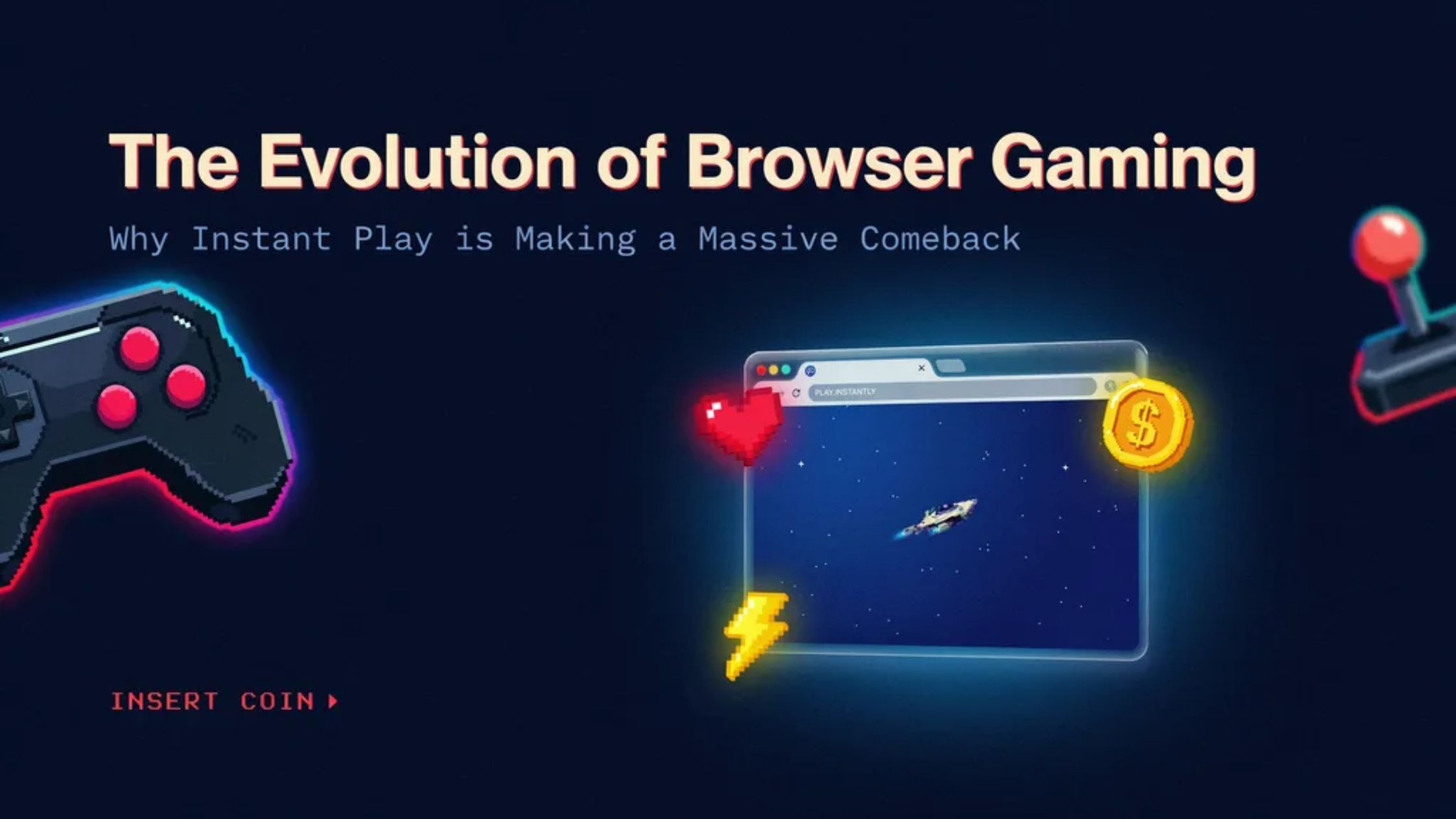
There was a time when browser gaming was defined by pixelated blocks, agonising loading screens, and the perpetual, frustrating pop-up demanding that you update your Adobe Flash Player. For millennials and older Gen Z gamers, those early days of playing simple arcade titles on school library computers or old family desktops are a core memory. They were fun, but they were undeniably limited.
Then came the era of the smartphone and the high-powered gaming console. Browser games were largely pushed to the wayside, dismissed as a relic of the early internet.
But quietly, in the background, the web underwent a massive technical revolution. The death of Flash made way for HTML5 and WebGL—technologies capable of rendering stunning 3D graphics, complex physics, and seamless multiplayer experiences directly inside a standard web browser. Today, browser gaming isn’t just surviving; it is experiencing a massive, sophisticated renaissance. Millions of players are skipping the digital storefronts, ignoring the 50-gigabyte downloads, and heading straight to platforms like playhop com to get their gaming fix.
Here is a deep look into how web-based gaming evolved, why the “instant play” model is dominating the industry, and what the future holds for this highly accessible frontier.
The Technical Leap: From Flash to HTML5
To understand why modern browser games feel so smooth, we have to look under the hood. The old internet relied heavily on third-party plugins. If a plugin crashed, your game crashed. If the plugin had a security vulnerability, your entire computer was at risk.
When browsers collectively dropped support for these outdated plugins, developers were forced to innovate. The result was a suite of open-source web standards built directly into browsers:
- HTML5: Allowed for native multimedia support without external software.
- WebGL (Web Graphics Library): Gave web browsers direct access to a device’s graphics processing unit (GPU), enabling hardware-accelerated 3D graphics.
- WebAudio API: Allowed complex, dynamic sound design to be rendered on the fly.
Suddenly, a browser wasn’t just a tool for reading text and looking at pictures; it was a fully functional gaming engine. Today, you can open a web browser on a budget laptop, a premium smartphone, or even a smart TV, and within seconds, you are rendering environments that would have required a dedicated gaming console a decade ago.
Why “Instant Play” is Winning Over Modern Gamers
The modern gaming landscape is incredibly rewarding, but it has a massive barrier to entry: friction.
If you want to play a top-tier console or PC game today, the process looks something like this: buy the game, clear out 100 gigabytes of hard drive space, wait three hours for the download, wait another thirty minutes for a day-one patch, create an account, verify your email, adjust your graphics settings, and finally, play.
Instant-play platforms eliminate every single one of those steps. When you visit a curated gaming hub like playhop com, the barrier to entry drops to zero. You click a game, it loads in your browser tab within three to five seconds, and you are playing.
This friction-free ecosystem appeals to three distinct types of modern players:
1. The Time-Crunched Professional
Not everyone has the time to dedicate to a three-hour gaming session. Millions of people look for “micro-gaming” opportunities—a quick five-minute break between work meetings, a brief distraction during a commute, or a relaxing puzzle before bed. Browser games are perfectly optimized for these micro-sessions. They launch instantly and can be closed just as quickly without the guilt of abandoning a massive campaign save-file.
2. The Casual Explorer
There is a massive demographic of people who love games but do not identify as “hardcore gamers.” They don’t want to invest in expensive hardware or navigate complex controller layouts. They want intuitive mechanics—match-three puzzles, endless runners, physics-based drawing games, or simple strategy titles. Web-based platforms offer massive, diverse libraries where players can hop from genre to genre without spending a dime or committing to a single title.
3. The Multi-Device User
We live in a multi-screen world. A typical day might involve switching between a work desktop, a smartphone, and a tablet. Because browser games live on the web, they are inherently cross-platform. A game that runs beautifully on your desktop monitor will scale down seamlessly to your smartphone’s touchscreen, allowing you to take your favorite casual titles anywhere without downloading dedicated apps.
The Breadth of the Modern Web Library
One of the biggest misconceptions about contemporary web gaming is that the titles are all simplistic or generic. In reality, the diversity found on modern gaming hubs is staggering. Developers have figured out how to compress deep gameplay loops into lightweight web packages.
When exploring a modern web catalog, you generally find several core pillars of gameplay:
| Genre | What Makes It Work on the Web | Ideal For |
| Hyper-Casual & Puzzle | Minimalist art styles combined with highly addictive, physics-based logic loops. | Brain training, quick breaks, and stress relief. |
| Action & Endless Runners | High-frame-rate rendering that tests reflexes and spatial awareness. | High-score chasing and twitch-reflex training. |
| Casual Multiplayers | Real-time matchmaking using lightweight web sockets to pit you against global players instantly. | Social gaming without the toxicity of major competitive lobbies. |
| Simulation & Strategy | Text-and-menu-heavy interfaces that require resource management and long-term planning. | Slow-paced, tactical thinking that you can leave open in a background tab. |
This sheer variety ensures that browser gaming never feels stale. If a particular puzzle gets too frustrating, a player is only one click away from a high-speed racing simulator or a relaxing farming tycoon.
The Economic Shift: Democratizing Game Access
The traditional gaming industry is expensive. Between hardware costs and subscription services, staying up-to-date with gaming culture can cost hundreds of dollars a year.
Browser gaming turns this economic model on its head by utilizing the Free-to-Play (F2P) framework, supported by unobtrusive ad monetization. Because the cost of distributing a web game is significantly lower than shipping physical discs or hosting massive digital downloads, developers can afford to give players access to their creations completely free of charge.
This democratizes gaming on a global scale. It allows players in developing economies, students on tight budgets, or families sharing a single low-spec computer to experience high-quality digital entertainment without a financial paywall. It strips away the elitism often associated with high-end gaming and focuses purely on the universal joy of play.
What to Look for in a Quality Gaming Platform
Because the barrier to entry for developing web games is lower, the internet is flooded with gaming sites. However, not all platforms are created equal. A poor site will clutter your screen with intrusive pop-ups, slow down your browser with unoptimized code, and offer a disorganized mess of broken links.
When looking for a premium instant-play experience, a few key factors set the best platforms apart:
- Curated Quality Control: The platform should prioritize quality over sheer volume. Every game should feel polished, responsive, and fun.
- Clean, Intuitively Designed Interfaces: You should be able to sort games by category, popularity, or recent releases without fighting through an absolute wall of advertisements.
- Responsive Mobile Optimization: A top-tier site adapts instantly to mobile touch screens, ensuring that the gameplay feels just as native on a phone as it does with a mouse and keyboard.
- Safe Environment: Premium platforms ensure that their games are clean, secure, and free from malware, offering a safe playground for users of all ages.
Finding a hub that balances these elements ensures that your casual gaming time remains relaxing and fun, rather than a frustrating battle against clunky web design.
Looking Ahead: The Future of the Browser Sandbox
As internet speeds continue to trend upward worldwide and cloud technology matures, the capabilities of the browser will only expand. We are already seeing the early stages of cloud streaming integrated into web spaces, hinting at a future where even massive, triple-A graphics packages might be launched out of a standard URL tab.
Furthermore, as artificial intelligence streamlines the coding and asset-generation process, indie developers will be able to build more complex, narratively rich web experiences at a fraction of the traditional cost and time. The line between what a local app can do and what a website can do is blurring into obscurity.
Final Thoughts
Browser gaming has officially outgrown its humble, nostalgic roots. It is no longer just a makeshift distraction for when you don’t have access to your “real” gaming setup. Thanks to robust modern web standards, flexible multi-device compatibility, and platforms like playhop com making discovery incredibly easy, the browser has firmly established itself as a premier destination for modern digital entertainment.
Whether you are looking to kill five minutes in a checkout line, unwind after a long day of data entry, or challenge your mind with a complex puzzle, the perfect game is waiting for you—no downloads, no installations, and no waiting required. All you need to do is open a tab and press play.